OTAN - Déclaration avec Donald Trump, Président des Etats-Unis d'Amérique
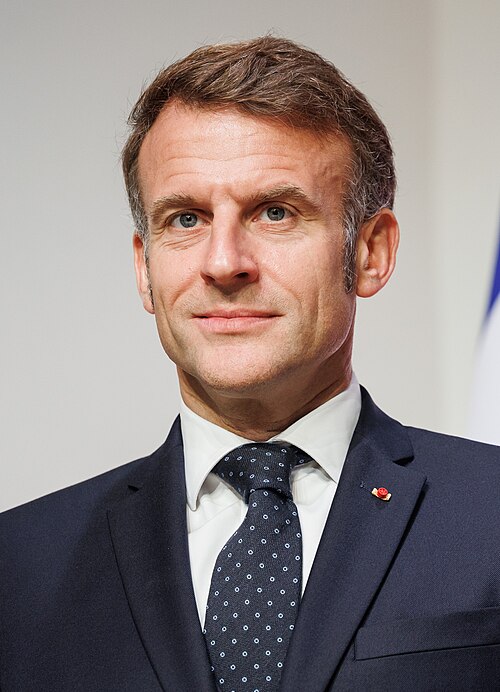 Emmanuel Macron
Transcription youtube_captions. À recouper avec la source d'origine.
Analyse automatique
Générée par IA — peut contenir des erreurs. Méthodologie
Chapitres
Répartition du ton (temps de parole politique)
Propositif 40 %Attaque 40 %Défensif 20 %
Questions et réponses
Taux de réponse directe : 81 % (directe = 1, partielle = 0,5, éludée = 0)
- 5:00RelanceRéponse partielle
President Trump, do you have a better understanding of what president Macron was saying about NATO ?
- 7:00OuverteRéponse directe
Mr. President, what is your message to president Macron about the tech companies, and what will your process be in determining what additional products from France you might apply tarifs to ?
- 11:00OuverteÉludée
Mr. President, has France committed to step up when it comes to taking back foreign fighters in Syria ?
- 15:00OuverteRéponse directe
M. le président, le président américain a eu des propos assez durs à votre encontre ce matin. Comment abordez-vous ce sommet de l'OTAN et cette rencontre ?
- 18:00OuverteRéponse directe
Sir, Mr. President, Prime minister Johnson, I believe, is organizing some sort of discussion later today about the Syria conflict. Are you gonna take part in that and meet with him ? And if not, why not ?
- 19:00OuverteRéponse directe
And, one other related question, the London Bridge attack from a few days ago, do you have any comment here on your 1st day ?
Affirmations vérifiables (citations exactes)
- 3:00D. TrumpChiffre
« I told you it was 130 million dollars. 130 billion dollars. »
- 4:00D. TrumpChiffre
« The number as of this moment is exactly 131 billion dollars. That's a year, that's a tremendous amount of money, but it's not enough. »
- 4:30D. TrumpChiffre
« And they also raised and have committments for 400 billion dollars. »
- 6:00D. TrumpFait
« We have a minor dispute, I think we'll probably be able to work it out, but we have a big trade relationship. »
- 8:30E. MacronChiffre
« Le premier, pourquoi on en est à cette situation ? Parce que, aujourd'hui, nous avons des entreprises numériques, quelle qu'en soit la nationalité, qui concurrencent des entreprises de l'économie réelle et qui ont 14 points de fiscalité en moins. »
- 10:00E. MacronFait
« Nous sommes engagés militairement dans des théâtres d'opérations qui supposent la clarté »
- 14:00E. MacronFait
« La coopération entre nos 2 pays, qu'elle soit militaire, économique, diplomatique est importante. »
- 16:00E. MacronFait
« La France l'a fait avec d'autres pays et donc, on aura à en parler, ma 1re interrogation, qu'est ce qui va se passer pour le Royaume-Uni, qui a pris la même taxe, pour l'Italie, même taxe, l'Autriche, l'Espagne, qui l'ont fait sur la base de la proposition de la Commission ? »
- 19:00D. TrumpFait
« I was very proud of those people that grabbed him and did such a good job between the fire extinguishers and whatever else. »
- 21:00D. TrumpFait
« I think the situation in Ukraine is very important. I think that the meetings coming up with Russia and Ukraine are very important. »
- 22:00D. TrumpPromesse
« He very much wants to, and so do we, work out a treaty of some kind on nuclear weapons. »
Modèle mistral-small-latest · prompt v1· les citations sont vérifiées mot pour mot dans le transcript ; le taux de réponse directe est calculé à partir des verdicts question par question. Aucun label idéologique n'est produit.
... -D.
Trump: Well, thank you very much. It's great to be with president Macron of France, and we've had a fairly long relationship, and a very good one. And we were just discussing certain things.
And then we're gonna have a long conversation afterwards. I want to, first of all, before we begin, I want to pay my respects to the great warriors that you lost in Mali, 13. Helicopters.
It was very sad. I've got no report on it. We talked about it.
And, please, give my condolences to the families and to France. They're great fighters. You've done a fantastic job in that whole area.
It's a tough area. So, we appreciate it very much. We'll be talking about a lot of things, including NATO and including trade.
We do a lot of trade with France and we have a minor dispute, I think we'll probably be able to work it out, but we have a big trade relationship. And I'm sure that, within a short period of time, things will be looking very rosy, we hope. That's usually the case with the 2 of us, we get it worked out.
We've had a lot of good, a lot of good things. We've done a lot of good things together as partners. Our countries have been partners in many good ventures, including some having to do with radical Islam and others.
And it's always worked out. So, I look forward to our discussion. We made a lot of progress in our first 25mn, and we intend to make a lot of progress in our next hour, maybe hour and a half.
So, thank you very much, my friend. -E. Macron: Thank you.
Merci beaucoup, M. le président. Je suis heureux, une fois encore, de retrouver le président Trump ici, à Londres.
Comme il a dit, d'abord, je tiens à le remercier pour ses condoléances et les mots qu'il a eus pour nos soldats, à qui nous avons rendu, hier, un hommage national à Paris. Nos 13 soldats sont tombés sur le théâtre des opérations au Mali. Et merci pour cette solidarité et aussi l'implication de vos soldats sur le terrain dans cette lutte contre le terrorisme.
Le président l'a dit, nous avons commencé nos discussions, nous allons les poursuivre. D'abord sur le plan bilatéral, avec des sujets économiques, commerciaux, dont nous allons, à coup sûr, une fois encore, trouver l'issue. Nous avions commencé à en parler à Biarritz, là aussi, pour ce qui s'agit de taxes sur le numérique ou des sujets commerciaux et l'ambition que nous avons aussi pour nos économies.
Il y a également les sujets qui concernent l'OTAN. Là aussi, nous avons également commencé à parler de plusieurs crises internationales pour nous coordonner. Et il est clair que nous aurons, lors de ce sommet, des discussions importantes, qu'elles concernent, d'ailleurs, l'implication des différents membres et de l'OTAN en tant qu'organisation au sein de la coalition internationale en Syrie, comme ces travaux que nous menons ensemble sur les différents sujets.
J'ai eu l'occasion de le dire à plusieurs reprises, la coopération entre nos 2 pays, qu'elle soit militaire, économique, diplomatique est importante. Il nous arrive parfois de ne pas être d'accord, on l'a vu sur le climat, mais, sur la lutte contre le terrorisme, sur les engagements essentiels, nos soldats, nos équipes travaillent côte à côte et nous décidons, je crois pouvoir le dire, en partageant beaucoup de finalités. Et nous avons toujours su trouver une solution aux problèmes qui nous étaient posés.
Donc je suis très heureux de pouvoir avoir cet échange et de le poursuivre dans un instant et, surtout, de pouvoir faire avancer les choses, ensuite, lors de ce sommet, qui doit répondre à des questions fondamentales pour l'organisation. Questions qui n'ont pas été traitées jusqu'alors. Comment bâtir une paix plus durable en Europe avec beaucoup de menaces aux frontières, parfois des incohérences ?
Comment, aussi, agir plus efficacement face à nos ennemis communs, en particulier le terrorisme islamiste ? Et, là aussi, il faut que tout le monde, autour de la table, soit parfaitement clair sur les définitions et finalités. Je sais que nous partageons cela ensemble.
Voilà. -D. Trump: OK, thank you very much for that. -President Trump, do you have a better understanding of what president Macron was saying about NATO ? -D.
Trump: Well, we've just began discussing NATO, and what I'm liking about NATO is that a lot of countries have stepped up, I think, really, at my behest, and also yourself, you're close to the level, but they've stepped up and they put up a lot of money. I told you it was 130 million dollars. 130 billion dollars.
And that's a lot. And they're now stepping up again. And it's gonna be 400 billion dollars.
We're very sure we have committments for 400 billion dollars and we just left the secretary general. And he's got some things that are very important. And I discussed with him the flexibilities so that we have it not just with one area of the world, you and I discuss this all the time, we have all areas of the world because NATO's a lot different than it was.
Now, it's certainly a lot different over the last 3 years. So, we have a lot of countries stepping up and putting up a lot of money. The number as of this moment is exactly 131 billion dollars.
That's a year, that's a tremendous amount of money, but it's not enough. And they also raised and have committments for 400 billion dollars. So, NATO, which was really heading in the wrong direction 3 years ago, is heading down.
If you look at a graph, it was to a point where I don't think they could have gone on much longer. Now, it's actually very strong and getting stronger. Many people are committed to that 2%, and, ultimately, I think the 2% will be raised.
And the president and I, I think, feel that we need more flexibility. And I think we both agree on that, so we can use it for other things, not just looking at one specific country. A lot of people say it was meant to look at, originally, the Soviet Union, now Russia, but we also have other things to look at, whether it's radical Islamic terrorism, whether it's the tremendous growth of China.
There are a lot of other things. So, NATO's becoming different than it was, much bigger than it was, and much stronger than it was because people are now fulfilling their committments. There are some countries that aren't fulfilling that aren't fulfilling their committment, and those countries are gonna be dealt with.
Maybe I'll deal with them from a trade standpoint, maybe I'll deal with them in a different way. I'll work something out where they have to pay. But, you know, we don't want to have people delinquent.
I don't think it's fair for us to be involved, including France, by the way, to be involved and you have countries that aren't paying their way, you know, less than 1%. You have a couple that are less than 1%. Not fair.
So, NATO's made a lot of progress over the last 3 years. And the word "flexibility" is very important. They're not just looking at one area now, they're looking at the world.
And that's very important. To me, it's very important. -E.
Macron: You know, I know that my statements created some reactions and shake a little bit a lot of people. I do stand by. And I have to say, when you look at what NATO is and should be, first of all, this is a burden we share.
And President Trump just reminded you some figures. And the fact that this is perfectly true that the U.S. overinvested decades after decades, and is No1 by far.
And I do share the statement. That's why I'm a strong supporter of a stronger European component in NATO, which is exactly what we are doing. So, in terms of clusterings, we are investing 1.9% of our GDP.
We are increasing our GDP. We will be at the rendezvous. But, when we speak about NATO, it's not just about money.
We have to be respectful with our soldiers. The first burden we share, the first cost we pay, is our soldiers' lives. And I do believe that, in such a circumstances, we do pay what we have to pay for collective security.
When I look at the situation in Syria, in Iraq, but as well in Sahel, France is definitely present. That's my 3rd point. It's that we have today strategic clarifications to be done.
It's impossible just to say : "We have to put money, we have to put soldiers," without to be clear on the fundamentals of what NATO should be. And this is not the case today. What about peace in Europe ?
I want us to have clarification about that. After the decision of the end of the INF treaty, we have to build something new, because, now, this is a risk for Germany, France, and a lot of European countries to have new missiles coming from Russia exposing ourselves. We need such a clarification.
And I want a European component to be part of the future negotiations of such a new INF treaty. When we speak about the enemy, I would say, of the INF...
What's the objective ? To protect our partners against external threats, and France will do it, and we will have full solidarity vis-a-vis eastern and northern states in Europe, but the common enemy today are the terrorist groups, as you mentioned. And I'm sorry to say that we don't have the same definition of terrorism around the table.
When I look at Turkey, they now are fighting against those who fight with us, who fought with us shoulder to shoulder against ISIS. And, sometimes, they work with ISIS forces. This is an issue, and this is a strategic issue.
If we just have discussion about what we pay and we don't have clear discussions about such a situation, we are not serious. We are not serious for our soldiers, we are not serious for our people. This is the very reason of my statements.
I do believe we need strategic clarifications. How to build longterm peace in Europe ? Who is the enemy today ?
And let's be clear and work all together on that. I know that we do share exactly the same idea. Having less budget exposure of the U.S. means more European investment and more clarity on the European side, I do agree.
Being strict and very efficient against terrorist groups means having clear, clear defintion of these groups and no ambiguity. I think we do agree. -D.
Trump: One thing I will also, I'd like to say that you've been really doing a great job in Africa and you've been very much involved there, more than most, and that's been fantastic. I appreciate you saying the United States for decades have been paying really way, way disproportionately too much for NATO. And you have other countries paying far too little that have very directly been benefiting by it and by the United State's involvement.
And we're changing that around somewhat, and it's very important, but we're a very important player. I think, without us, NATO, certainly, is not the same thing, as we discuss, and discuss it at length. This morning, we discussed it with Secretary General Stoltenberg.
But we're behind your 100%. And all of the money that's been raised, and all of these countries that are all of a sudden putting up money, it's a great thing to see. But we do have a great...
We really have a different objective, I think, right now. We're looking at a much bigger picture. And that includes...
Well, it includes, you mentioned Iraq, but it really includes Iran, too. I think that, if you look at what's going on in Iran, they have massive riots, they're having protests all over the country, and they're killing a lot of people, everybody knows that. That's why they turned off their Internet system, so nobody can find out.
But if the media would go there, and it's, I think, very hard for the media to go there, frankly, right now, but they're killing a lot of people, but NATO has come a long way in 3 years, and it's something that we're very proud of because we're with them. NATO serves a fantastic function if everybody's involved. If they're not involved...
And I really believe that the president is very much involved and likes the idea of NATO, but he wants it also to be utilized properly. If it's not utilized properly, we all agree, right ? That's no good.
So, we've had a very good discussion. A lot of people, and we're meeting with a lot of countries later, as you know, and they're really stepping up. For the most part they're all stepping up.
We have 1 or 2 that aren't and we'll have to deal with them in a different way. Maybe we...
As I said, we'll deal with them on trade. We have a lot of power with respect to trade. They make a fortune with the United States, and then, they don't pay their bills, that's no good.
But NATO's come a long way in 3 years, and it's become very powerful. I think very, very powerful. And it's become, I think, a much fairer statement in terms of the United States because we're able to go down a little bit.
We were paying 4 to 4.3% of the largest GDP ever. Nobody's ever had a GDP like we have right now.
And nobody's come close. And other people were paying 1%. Some people paying less than 1% of a very small GDP, it's not fair.
And, if they get attacked, we protect them, but it's not fair. So, a lot of changes have been made. Phil, go ahead. -Mr.
President, what is your message to president Macron about the tech companies, and what will your process be in determining what additional products from France you might apply tarifs to ? -D. Trump: Well, we're working on that right now, we have discussed it.
I think we'll be able to work something out, I hope. And maybe not, maybe we'll do it through taxing. You know, you can work it out easily through taxing.
But, the techs, you know they're American companies. The tech companies that you're talking about, they're not my favorite people because they're not exactly for me, but that's OK, I don't care, they're American companies. And we want to tax American companies, Phil.
That's important. We want to tax them. That's not for somebody else to tax them.
And, as the president knows, we taxed wine, and we have other taxes scheduled, but we'd rather not do that, but that's the way it would work. So, it's either going to work out, or we'll work out some mutually beneficial tax. And the tax will be substantial.
And I'm not sure it's going to come to that, but it might. It might. -Mr.
President, has France committed to step up when it comes to taking back foreign fighters in Syria ? -D. Trump: Well, I haven't asked that to the president today.
I have over the period of time. We have a tremendous amount of captured fighters, ISIS fighters over in Syria. And they're all under lock and key, but many are from France, many are from Germany, many are from U.K.
They're mostly from Europe. And some of the countries are agreeing. I have not spoken to the president about that.
Would you like some nice ISIS fighters ? I can get...
You can take every one you want. -E. Macron: Let's be serious.
A very large number of fighters you have on the ground are ISIS fighters coming from Syria, from Iraq and the region. It is true that you have foreign fighters coming from Europe, but this is a tiny minority of the overall problem we have in the region. And I think No1 priority, because it's not yet finished, is to get rid of ISIS and these terrorist groups.
This is our No1 priority. And it's not yet done, I'm sorry to say that, you still have fighters in this region, in Syria and now in Iraq, and more and more. And the whole destabilization of the region makes the situation more difficult to fix the situation against ISIS.
Second, some of these foreign fighters are being judged in Iraq because of the deeds, precisely, they act in this very region. And we would have a case-by-case approach. We have a humanitarian approach for children already organized, and we will have a case-by-case approach.
But, for me, the very 1st objective in the region is to finish war against ISIS. And don't make any mistake, your No1 problem are not the foreign fighters, this is the ISIS fighters in the region. And you have more and more of these fighters due to the situation today. -D.
Trump: This is where he's a great politician, because that was one of the greatest non-answers I've ever heard. And that's OK. -E.
Macron: Because, sometimes, there is...
You can have some temptation from the U.S. side, I don't say about President Trump, but it could be the press, to say : "This is a European responsibility", I'm sorry to say that.
We have some of our people, but, if you don't look at the reality of the situation that is No1 not to be ambiguous with these groups, this is why we started to discuss about our relations with Turkey, but I think any ambiguity with Turkey vis-a-vis these groups is detrimental to everybody for the situation on the ground. -D. Trump: France has actually taken back some fighters, but we have a lot of fighters, we captured a lot of people, and we have captured 100% of the caliphate, but you know that that means that it's still going and going.
We sent a small contingent in, and we wiped out another portion of ISIS. We don't want to happen to me what happened with President Obama where it re-formed and then, it became stronger than it was in the 1st place. So, we don't want that to happen.
And, as I said before, we've taken the oil, we have the oil. So, we have total control of the oil so that they are not gonna be able to use that. They use that oil to really, to fuel up their wealth, to fuel up their money.
That was their primary source of income. And they get contributions. So, we have now lists of where these contributions come from, which is very important.
We have people contributing, if you can believe it. Some of these people are wealthy people that make contributions. And we have lists of...
Well, we learned a lot. You know, when we got al-Baghdadi, that was a great get. And, when we killed him, we have a lot of information that I'm revealing now for the 1st time.
But we also got a lot of good information. So, a lot of things are happening. And France has been very helpful, I have to say that.
They've been very, very helpful. OK ? Go ahead.
Any other questions, please ? -M. le président, le président américain a eu des propos assez durs à votre encontre ce matin.
Comment abordez-vous ce sommet de l'OTAN et cette rencontre ? -E. Macron: Comme vous le voyez, avec beaucoup de pragmatisme et avec la volonté de faire avancer les sujets comme toujours.
Je défends les intérêts de la France, c'est aussi une position européenne, et je le fais avec le souci également d'avoir une relation amicale et constructive avec les Etats-Unis d'Amérique. Et c'est ce que nous avons toujours privilégié avec le président. On a eu une discussion sur l'OTAN.
Et je viens de réexpliquer quelle était notre position, et elle est assumée, elle est assumée, parce que nous sommes engagés militairement dans des théâtres d'opérations qui supposent la clarté, ça a été évoqué. Il y a des sujets, ça a été évoqué par votre collègue américain, qui ont été révélés hier, celui de la taxe numérique. Sur ce sujet, je peux vous apporter une réponse extrêmement claire.
Le premier, pourquoi on en est à cette situation ? Parce que, aujourd'hui, nous avons des entreprises numériques, quelle qu'en soit la nationalité, qui concurrencent des entreprises de l'économie réelle et qui ont 14 points de fiscalité en moins. C'est ça, la réalité.
Donc, il y a un biais, c'est pas juste. Nous avons, sur la base de la proposition de la Commission européenne, passé une taxe numérique. Elle ne vise pas du tout les acteurs américains.
Des entreprises françaises, chinoises, de toutes les nationalités sont touchées. Elle permet de corriger, pour une partie d'entre elles, cet écart injuste et de répondre à une nécessité. La France l'a fait avec d'autres pays et donc, on aura à en parler, ma 1re interrogation, qu'est ce qui va se passer pour le Royaume-Uni, qui a pris la même taxe, pour l'Italie, même taxe, l'Autriche, l'Espagne, qui l'ont fait sur la base de la proposition de la Commission ?
Parce que, si on est sérieux, il faudra que tous ces pays soient traités à la même enseigne. Donc nous sommes, là, dans une phase, qui va rentrer, de discussion qui va se poursuivre dans les prochaines semaines, et je pense qu'avec le président Trump, nous pouvons régler cette situation. Et ce qui avait été, d'ailleurs, discuté à Biarritz, et je regrette que cette solution soit abandonnée, parce qu'elle était bien meilleure et pour les Etats-Unis et pour l'Europe, c'est d'avoir une taxe au niveau de l'OCDE.
Et d'avoir une vraie taxe multilatérale, qui permet de ne faire aucune distinction, aucun biais, mais de taxer ces activités numériques par rapport au biais qu'elles créent dans chaque pays. On va voir ce que donnent les discussions dans les prochaines semaines, mais elles impliqueront, de toute façon, une réponse européenne, car, en la matière, c'est pas la France qui serait sanctionnée ou attaquée, c'est l'Europe. Et donc, la Commission s'est exprimée ce matin pour apporter son plein soutien et c'est la Commission européenne aussi qui aura à réagir s'il devait y avoir une escalade, mais, moi, j'ai plutôt confiance dans le fait que, là aussi, on saura trouver une solution ensemble.
Donc, voilà, il m'appartient pas de commenter tel ou tel propos, mais de vous dire que, pour ma part, je suis déterminé à défendre les intérêts de notre pays, à défendre les intérêts européens et à le faire dans le plus grand respect et l'amitié avec les Etats-Unis d'Amérique et le camp de la liberté, si je puis dire. -D. Trump: And I largely agree with that answer.
I just have to say that, you know, I came into a position where the European Union was making anywhere from 100 to 150 billion dollars a year in deficits to the United States, they were making it, we were losing it. And so, we had to do something that is fair, not severe, I think fair. We're losing tremendous amounts of money.
As you know, the European Union is very strong on barriers, barriers meaning certain of our products can't come in, including agricultural products. It just can't come in, we can't sell it. And yet, the European Union sells openly to the United States, and generally untaxed or taxed at a low level.
So, these are problems that we're talking about. These are problems that we're working out. And, you know, the digital tax is the least of it.
I inherited a situation where the European Union, which was formed partially for this reason, I guess for a lot of reasons it was formed, but, partially, to make better or take advantage of the United States. And they've done that very brilliantly. And, frankly, it's not right.
So, I've exposed it, a lot of people didn't know it, and we're doing things about it. We have no choice because the United States can't continue to lose the kind of money that they've lost over the last... literally since the formation of the European Union.
And I think we'll work something out. They want to talk, as you know. The new head wants to talk, who's supposed to be a very respected woman, very highly respected, and I look forward to meeting her, they want to meet, but we have a very unfair trade situation where the U.S. loses a lot of money for many, many years with the European Union.
Billions and billions of dollars. I mean, to be specific, over 150 billion dollars a year. So, we don't want to be doing that.
And we can make a deal. We can take a harsh approach. We can solve that problem instantaneously if we wanted to, but I don't want to do that.
These are friends of ours, these are people we've had very extraordinary relationships with, and I do, personally, and I'm sure we can work something out. -You mentioned earlier the Iran protests. Does the United States support these protesters in Iran ? -D.
Trump: I don't want to comment on that, but the answer is no, but I don't want to comment on that. *-Mr. President, on Turkey, it's been said that the United States should do more than standing up to president Erdogan in clarifying the terms of that relationship.
Are you supportive of those efforts by other NATO allies or are you standing in the way of them ? -D. Trump: Well, I can only say we have a very good relationship with Turkey and with president Erdogan, I do.
I can't speak for the president of France. I mean, we have a very good relationship. We pulled our soldiers out.
We said : "You can patrol your own border now. I don't care who you do it with." But we're not gonna have soldiers patrolling a border that's been fought over for 2 000 years.
But we took our soldiers out. We put some of those soldiers around the oil, where we've captured the oil and taken the oil. And we have the oil.
But we've...
And we brought some home. And we will be bringing some home. And we've sent some to other areas.
OK? But we have a very good relationship with Turkey. -Mr. president ? -E.
Macron: I just want Turkey to be clear. We have a lot of cooperations with Turkey on security, trade, migration, and so on. There is a full state agenda with the European Union and France.
I do respect all leaders, whatever they can say. Even bad things about myself. I do respect all words from anybody.
But now, the question, for this NATO summit, I think we need clarifications from the Turkish side. This is not us to qualify them and what they are doing, but I do believe at least we have 2 clarifications to be asked. How is it possible to be a member of the Alliance, to work with all of us, to buy our matters, to be integrated, and to buy the S-400 from Russia ?
Technically, it is not possible. Clarifications should be provided by the Turkish president as far as he wants to be part of it. S econd, I understand from Turkey that they want to block all of the declarations of this summit if we do not agree about their definition of terrorist organizations, qualifying YPG and the others as terrorist groups, which is not our definition.
These 2 points have to be clarified if they want to be a serious member of the Alliance, I think so. -D. Trump: This is why...
This is really why we're having meetings, because they are our points. And we'll be discussing that with the president today. Yes. -Mr.
Trump, will you issue sanctions on Turkey over their purchase of the S-400 missile system ? -D. Trump: We're looking at it now.
And we're talking about it now. As you know, Turkey wanted to buy our Patriot system, and the Obama administration wouldn't let them. And they only let them when they were ready to buy another system, which is not the same system.
But Turkey, for a long period of time, wanted very much to buy the Patriot system, which is our system, which is what NATO uses, which is a great system, which is the best system. But they wouldn't sell it to Turkey. So, you know, there are 2 sides to a story, I have to say this, but we will be discussing that with Turkey in a little while.
We'll be meeting with Turkey in a little while. And also tomorrow. Phil ? -E.
Macron: But, to be clear about this point, and for you to have the full overview, they were discussing with Europeans on SAMPT, and we accepted to sell the SAMPT to them. So, this decision is not due and 100% explained by the refusal a few years ago of the Americans not to sell the Patriot. It's their own decision.
Even having a European option totally compliant with NATO. So, they decided not to be compliant with NATO. -Sir, Mr.
President, Prime minister Johnson, I believe, is organizing some sort of discussion later today about the Syria conflict. Are you gonna take part in that and meet with him ? And if not, why not ? -D.
Trump: Are you talking about Ambassador Johnson? -Boris Johnson, the Prime minister. -D.
Trump: Oh! I thought you meant Woody Johnson. I said : "Boy, he's really risen rapidly, Woody." Where is Woody?
Is he here ? He's not here, this is his house, I can't believe he's not here. Yes, we'll be meeting with Prime minister Johnson in a little while.
I'll be seeing him later on. We're going over to No10, which is a very exciting place to be, as you know. We'll be discussing a lot of different things, yes. -And, one other related question, the London Bridge attack from a few days ago, do you have any comment here on your 1st day ? -D.
Trump: No, I don't have a comment on the London Bridge attack other than to say that I was very proud of those people that grabbed him and did such a good job between the fire extinguishers and whatever else. It was an amazing job they did, and he was very violent. You could see that.
I mean, this was captured very much on tape. I think the... the way the...
I think they were British citizens. The way they stepped up was incredible. That was really great.
So, terrible thing, terrible attack. Lot of people very badly hurt. I believe 3 or 4 killed.
Is it 4 now today ? So, it's terrible. It's a terrible thing.
And I know it's an act of terrorism, it's been declared an act of terrorism. Radical Islamic terrorism, by the way. And it's very bad, very bad.
But I think the way they stepped up, to me, that was something very special. OK ? -Mr.
Trump, a question on Russia. Mr. Macron says that Russia shouldn't be designated as an adversary of NATO.
Do you agree with that ? Do you think Russia is the enemy ? And, Mr.
Macron, who is the enemy today ? -D. Trump: I don't think he does feel that.
I think we get along with Russia. I think we can get along with Russia. I think you feel we can get along with Russia.
We've discussed that before. But, certainly, we have to be prepared whether it's Russia or somebody else, we have to be prepared. But he and I have a pretty similar view on that.
I think we feel that we can get along with Russia. And I think it's a good thing to get along with Russia. And I campaigned on it.
I'm going to big stadiums, people like it. And I think the Russian people would like to see it, too. A lot of good can come of it.
But the purpose of NATO is that, but the purpose of NATO can be much more. And that's where we're showing the flexibility over the last period of 2 years. OK ? -E.
Macron : Pour être clair sur une question, l'Alliance s'est organisée pour, en effet, faire face à la Russie historiquement. Je pense qu'aujourd'hui, il nous faut regarder la nouvelle situation historique et aussi notre géographie. Je l'ai souvent dit.
Je n'ai aucune naïveté à l'égard de la Russie. Et nous sommes très conscients sur les attaques cyber qu'il y a pu avoir, sur les conflits gelés qu'il y a aux frontières de l'Europe et y compris sur la crise ukrainienne que nous vivons. Est-ce que le statu quo est la meilleure des options ?
Je ne crois pas. Et donc, nous devons engager une procédure avec quelques pré-conditions et une méthode. Les pré-conditions, c'est, on le sait, de savoir avancer sur le conflit ukrainien.
C'est ce que nous ferons, d'ailleurs, le 9 décembre prochain à Paris avec un sommet en format Normandie pour essayer d'acter des avancées entre l'Ukraine et la Russie. Ensuite, c'est de pouvoir définir un agenda où les Européens, si possible, ensuite, les membres de l'Alliance, définissent des procédures, des définition de menaces communes avec la Russie, de coopérations possibles, en tout cas de désescalade. Ca prendra du temps, mais je pense que, si nous voulons, d'une part la stabilité en Europe, d'autre part réduire la conflictualité, il est important d'initier un dialogue stratégique avec la Russie.
Il faut le faire sans aucune naïveté. Et il faut le faire en étant conscient aussi du poids de l'histoire et de la peur que certains pays européens ont à l'égard de la Russie. Et je le dis ici en ayant beaucoup de respect et d'empathie pour ces derniers.
A l'égard de la Pologne, des Etats baltes, de certains Etats nordiques, de la Roumanie et quelques autres, nous savons que, ce qui est attendu de nous, c'est aussi de les protéger à l'égard de potentielles agressions. Et donc, dans ce cadre-là, nous devons apporter de la visibilité pleine et entière sur les protections que l'Alliance et, en son sein, l'Europe peut et doit leur apporter. Et la France y jouera tout son rôle.
Enfin, si je pense qu'il y a un ennemi commun, c'est le terrorisme international et, en particulier, le terrorisme islamiste, soyons clairs. C'est ce qui nous conduit à agir ensemble au Levant dans le cadre d'une coalition internationale qui est, aujourd'hui, mise sous responsabilité américaine, mais où l'OTAN est engagée en tant qu'organisation, et, comme vous le savez, la France qui est très présente. C'est aussi ce qui nous conduit à agir au Sahel, contre ces groupes terroristes. -M. le président, on vous sent autant déterminé qu'isolé sur la scène européenne, parce que vous avez parlé de la peur de la Russie aussi de la peur, il faut le dire, des Etats-Unis de la part de certains de vos voisins qui se disent : "On peut pas avoir à la fois une défense européenne forte et être dans l'OTAN." Je sais que c'est ce que vous essayez de dire, vos conseillers disent : "On peut avoir fromage et dessert", c'est l'expression qui est revenue.
Comment vous arriverez à bouger les lignes sachant qu'il y a des situations politiques un peu plus compliquées y compris chez vos voisins les plus puissants, en Allemagne, en Italie ? -E. Macron: D'abord parce que c'est pas fromage et dessert.
Ou alors c'est un cheesecake. Parce que, en l'espèce, ce dont on parle, c'est d'avoir une Europe qui investit plus dans la défense, ce qui permettra de réduire l'investissement américain. Donc c'est parfaitement cohérent, mais, après, il faut être simple, c'est un rapport à la souveraineté et à la puissance.
Il est légitime que les Etats-Unis d'Amérique nous disent aujourd'hui : "Pour protéger vos frontières européennes, "pour aller régler vos conflits de voisinage, "qui sont votre voisinage, "vous devez être plus investis, vous devez payer davantage, vous devez investir davantage." C'est légitime. Et donc, nous ne sommes pas dans une situation de sortie de Deuxième Guerre mondiale où, il faut bien le dire, l'Europe était désarmée et où une partie des Européens ne voulaient pas du réarmement de certains Européens.
Je pense aux Allemands. Et nos mentalités ont été construites pendant des décennies où l'OTAN était, d'ailleurs, fait pour que certains n'aient pas accès à une souveraineté militaire. Les temps ont changé d'abord, parce qu'il n'y a plus de pacte de Varsovie, j'ai cru comprendre que le mur de Berlin était tombé, ça fait quand même 30 ans, et il y a aussi, depuis plusieurs années, des Etats-Unis d'Amérique qui nous disent : "Prenez vos responsabilités." Nous devons les prendre.
Je suis pas aussi pessimiste que vous. Ces 2 dernières années, on a fait avancer une coopération renforcée, un fonds européen de défense, une initiative européenne d'intervention, dont tout le monde nous disait qu'elle était impossible. Maintenant, il y a chaque mois des nouveaux membres.
Les 8 membres historiques étaient présents le 14 juillet à Paris. La Grèce nous rejoint, l'Italie souhaite nous rejoindre et ça continue et donc les choses avancent. Il y a une vraie dynamique, et elle continuera d'être là et elle se fera, je dirais, de manière totalement intégrée avec l'OTAN.
Et c'est les ambiguïtés qu'il faut lever à l'égard de certains autres qui ont peur. Ca suppose pas de se livrer aux menaces extérieures, de se désarmer, au contraire, ça veut dire une Europe qui prend ses responsabilités au sein de l'Alliance pour alléger la charge des Etats-Unis d'Amérique et pour porter sa part de souveraineté. -Une proposition pour l'après traité FNI ? -E.
Macron: D'avoir une discussion, maintenant, stratégique. On va commencer à l'avoir. J'en ai parlé avec le secrétaire général Stoltenberg, on en a parlé avec, on a commencé à en parler avec le président Trump, mais il est clair que nous devons assurer l'ensemble des pays de l'Europe et je pense aussi à ceux qui sont à moins de 500km de la frontière russe, qui n'étaient pas couverts par le traité FNI de ne pas être exposés à des armements russes.
Et donc, il nous faut, nous, clarifier la position commune que nous souhaitons prendre, les parties prenantes à un nouveau traité, c'était, jusqu'alors, un traité bilatéral. Je souhaite que l'Europe prenne ses responsabilités, en tout cas, la France le fera, qui est, comme vous le savez, une puissance dotée, et que nous puissions, ensuite, une fois cette coordination faite, engager un nouveau dialogue, un nouveau débat avec les Russes pour répondre à ces problèmes de sécurité et de désarmement sur notre propre sol. -D.
Trump: And I think the situation in Ukraine is very important. I think that the meetings coming up with Russia and Ukraine are very important. And there's a possibility that some very big progress can be made.
It's very important for Ukraine. I think it's very important from the standpoint of Russia also that they work out a treaty, they work out peace, because they've been fighting a long time, too long. And I think there's a really good chance that that will happen.
Also, with respect to nuclear weapons, I've spoken to president Putin, and I've communicated with him. And we are...
He very much wants to, and so do we, work out a treaty of some kind on nuclear weapons. That will probably then include China at some point, and yourselves, by the way, but it will include China, and some other countries, but we intend to see if we can work something out to stop the proliferation, to stop what's happening because we are making a lot and we are renovating a lot, and, frankly, the whole situation with nuclear is not a good...
It's not a good situation. We ended the treaty because it wasn't being adhered to by the other side. But they want to make a treaty, and so do we.
And I think it would be a great thing. I think it's one of the most important things we can do, frankly, so, we're gonna be dealing with Russia on a... a treaty where we really...
And we're focused on nuclear and nuclear weapons, missiles, but nuclear weapons. And we think something can be worked out. We think they want to do it, we know they want to do it.
And we want to do it also. I spoke to China about it. They... during one of our trade negotiations, they were extremely excited about getting involved in that.
So, some very good things could happen with respect to that. And I think it's very important. The whole nuclear situation, very, very important.
OK ? Thank you all very much, Thank you, thank you, thank you.