He's the boss of Instagram : my interview with Adam Mosseri (English and French available)
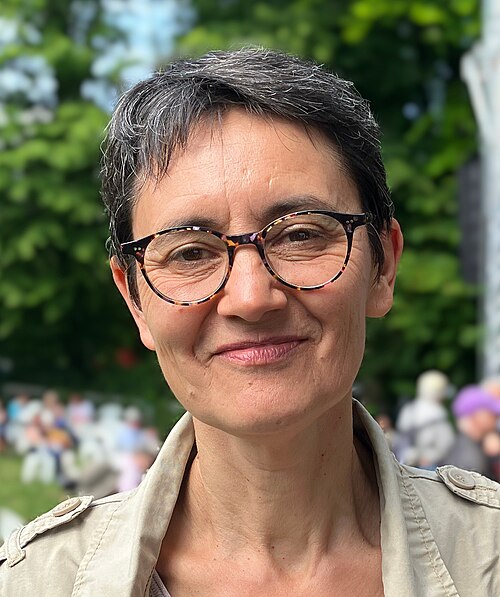 Nathalie Arthaud
Transcription Whisper (large-v3), avec identification des locuteurs. À recouper avec la source d'origine.
Hi, Adam Mosseri. Hi. Thank you so much for taking the time. Welcome to the channel.
Thank you for having me. I'm excited to be here.
We've got loads of topics to see here together. You're 42 years old. You're the head of one of the biggest social networks in the world. It's, of course, Instagram. Instagram has between 2 and 2.5 billion active users. That's what I looked up online. That's about like a quarter to a third of the world's population, which is kind of impressive. I'm, of course, one of them as a content creator, as a journalist, but also just someone spending some time online. And so today I have lots of questions for you.
We'll talk about your job, talk about meta, talk about content creation, also talk some sensitive topics, which I feel are important about misinformation, online harassment, mental health, AI, all those topics, and see how you view those questions as a head of Instagram to see and try and understand what happens behind Instagram. So thank you so much again. It's a lot to cover. I'm excited. Yeah, we'll try and cover. I hope it'll be good. I'm sure it'll be interesting. So to start with, you've worked at Facebook and meta for almost 20 years, quite a few years now. Yeah, I started. 17 years old.
Yeah, I was in 2008. I started as a designer, like just an entry-level product designer. I was 25 years old.
Okay. And then you did so many things at meta. And since 2018, you've been the head of Instagram. What does that mean? What exactly do you do and what don't you do as a head of Instagram?
It's a great question because meta owns a couple different apps. There is stuff that is shared and there's the stuff that is what we would say federated. So ultimately, I'm responsible for the app and most of the teams that work on the app report directly to me, particularly if you work 100% on Instagram. So I manage an engineering team, a design team, a research team, an analytics team, a product management team, and some others. But then there are other teams that we lean on a lot. There is one infrastructure team that supports all of the apps. There's one ads team that supports all of the apps. There's one safety team that supports all of the apps.
And so I will have infrastructure ads and safety teams as well, but they are sort of serve… Language of order. Exactly. And then I'm also responsible for supporting partnerships, policy, legal, marketing, communications, what we think of as the business functions as well. So I try to think of the app from end to end and hire the best people I can and help guide them forward, but support them ultimately as opposed to necessarily direct them.
Instagram started as a photo app quite a while ago. Feed of only square photos. Only square photos. And today it's clearly way more than that. So how would you describe Instagram today? And for example, how would you say it's different from Facebook or other platforms that may exist today?
So a lot of what we've done has changed and Instagram has become more complicated over the years. I think it's a little too complicated if I'm honest, but working on ways of simplifying. But the heart of what we do has stayed the same. We've always looked to connect people over creativity, right? Be a place where creative people like you can express themselves and the rest of us can not only enjoy that content, but talk to our friends about that content. How we do that has changed. We've added DMs or messages. We've added stories. We've added reels, notes over time. But the core needs that those products or those features are meeting stay the same.
And I think that'll continue to be the case where I think the product will change in the next five or 10 years, but those needs I think will stay the same. But you also asked how we, you should go too, but if you want me to answer how it differs, we are, I think, more focused on a subset of groups like young people and creators and Facebook. And we have, I think, a broader range of tools to hopefully enable more flexibility to creatives than things like YouTube or TikTok, which are more specialized just on video.
And so I was asking myself like how you define a social network like Instagram. would you say today it's the format, but at the same time you see that like, of course, format are changing, you know, evolving like very fast. Is it like this goal you just defined here? Like what's the main thing you say would stay like all through the years? Is it this goal you just talked about, this question of creativity?
For Instagram, yeah. Yeah. But for a social network, it could be broader. So I think of a social network as a place where people can connect with content and friends, and the content is generated by, well, public accounts and private accounts. So user-generated content, connecting with content and friends. So, you know, you might have platforms that are much more focused on a specific format like Clubhouse and audio. You might have networks that are much more focused on a type of content. Like at least LinkedIn started focused primarily on professional content. They've actually expanded a lot since then.
Usually we all start with a specialization and then we broaden, you know, and then we compete.
And we've seen it with other platforms, of course. We've seen, you know, TikTok trying to do long videos. Yeah. And even us, like we've been trying to post like some 10 minute long videos on TikTok. And now they're working sometimes better than like short form. And we're like, oh, that's weird. YouTube, of course, is trying to do short videos. Spotify is trying to do video too. What about Instagram? Like how do you navigate through all of those changes?
Yeah, it's wild. So there's a lot of ways to think about it. I'm making space here. That's a big question. I don't know if anyone's going to be able to see this. The way I think about it, or at least one way to think about it, is there are three different types of experiences. And you can't do all three well, I think. You can connect with friends. That's one type of experience. There's short form video. That's another. And then there's long form video, which is another. You can do, I think, really good work around connecting with friends and short form video in the same app. And you can do really good work around short form video and long form video in the same app.
I don't think you can do connecting with friends and long form video in the same app really well. Because if I watch a video for 10, 20, 30 minutes, that's a lot of messages to friends, commenting on friends, seeing friends' photos and videos that you did not do. Whereas with short form video, what happens is you watch a lot of them and you send some to your friends in a DM. And then it sets a conversation and that brings them back into Instagram. And then they see some and then send it to another friend. So those things are symbiotic in a way long form video is not. YouTube has always been very focused on maximizing the amount of time spent on the platform.
TikTok actually similarly, which is why I believe they're leaning more into long form video. We don't goal our teams on time spent. Time spent is, I think, a nice measure of how relevant we are in the world. But it's not our primary goal. Because if we do that, we would go all long form video and we would lose that friend part, which I think is really at the heart of our identity. And I don't think we can lose that.
But at the same time, you could think that like, and TikTok does it quite well today, that like on even Instagram on wheels, like having lots of short form content would make you stay on the app.
Sure, for sure. Short form video can definitely drive time spent. I think one of the reasons TikTok has struggled, even though they have had some success on more friend type content, is because they focus also a lot on longer video and on time. So that's why I think some of their stories products haven't done as well. They've done better with messaging, because I think short form video is good there. But they made their friends tab a Be Real app tab for a while, and that didn't really work. They've had a bunch of different fits and starts. And I think that's partly because their primary goal is overall time.
And that really isn't a lot of tension with seeing content from friends, messaging friends, commenting on friends content, and connecting with friends and all the other ways you can do. Yeah, totally makes sense.
Because we can also see like YouTube, for example, they've integrated some shorts. It's working quite well today. I mean, I see at least on my accounts. Yeah. But they also tried to do like a sort of a social network thing with like friends and stuff. And that didn't work. I don't even know if it's still there today, but like at least they tried. And yeah, it didn't work as much.
They had stories for years and it didn't work. And they had messaging for, I think, six years.
Yeah. And they unlaunched it a few years ago. Yeah. So it tends to show, yeah. Long form, as you're saying, is maybe not compatible with this sort of friends. They're just more intention. Interesting. And also we've seen, especially like in Asia or in China, the building of like what sometimes people call super apps. Yeah. Like WeChat, for example. Wild. Yeah. Which are basically, for those who don't know, like you can message, search, pay, shop, do like all the, you know, cab, like do so many things with one app. Pay your rent. Pay your rent. Like bank.
People keep a budget. They have a, they have a decent float actually. WeChat and some of these other major apps.
And like, if you're over there, like you need this app to basically like do most of the things today, which is kind of impressive. We've seen like Elon Musk with X, for example, trying to, I mean, that's what he says, like build a super app by integrating, you know, messaging as the whole social media thing, video payments, AI now, which is very strong too over there. Is that like a goal for Instagram too or for Meta to have a sort of a super app? Not explicitly.
I think there's a value in them, but I also think what works in China doesn't necessarily work outside of China. And we see that in a lot of different ways. So one small example, live video. If you look at any of the Chinese networks, it is an immense percentage of time spent on them. Something like 20%. Whereas on all of the apps that we can tell outside of China, it's less than 1%. This is something different going on in China. I think it has to do probably with how the media works around censorship, around, you know, freedom of speech.
And you can't get some of that type of content on TV the way you can on some of the super apps the way you can in France and Europe and the US and a lot of the rest of Asia. And so there's just some big differences. And even when you look at countries that are obviously different, I want to be sensitive here, but culturally proximate and a lot of consumer behaviors to China, like Indonesia, you just see these huge differences. So now look, I think Elon is taking X in a new direction. I think it's interesting. We'll see if he's successful or not. But for us, I think that opens up some opportunities.
I'm happy to compete with X on video with Instagram and then to compete with X on perspectives and conversations and debates with culturally relevant creators with threads. Because I think threads is better at that than Instagram. And I think we'll be better at that than X over time.
And what's also interesting is to see that we've seen like more and more, you know, social media or even like formats arrive in the past few years, but also like be adopted by the users in an increasingly like fast way, like Instagram in a few years, at least in France, like managed to get like millions of followers, but also like short form, you know, reels like formats, you know, today, like if you go in the subway, like you'll see everyone watching those formats. And it's the same for like other type of content. This idea that like things are going faster and faster, the like adoption of like new formats is, you know, evolving in a sort of a fast way.
How do you see this question today and how does it impact your work today?
It just creates even more urgency and makes agility and speed even more important. But look, this is a long trend is that technology is advancing faster and faster. If you look at what I would call like the dominant forms or the primary forms of communicative media or technology over time, their reigns of being the primary sort of have shortened, you know. So let's go like, if you go back 100 years, you know, I think that film was actually big before the radio and that lasted many decades. And then radio was really important, but it kind of became the primary thing in maybe the 20s. And that only lasted until the 50s or 60s. And then TV became important.
And then that lasted for a couple of decades. And then the internet and websites became important. And that lasted for maybe two decades. And then apps became important. And then, you know, that's lasted for less time. And so you're seeing these 10 years of these primary ways that we entertain ourselves or consume information or connect with friends. And their reigns as sort of the champion or the lead is shortening over time as technology evolves more and more quickly. And so for us, the question is, how do you evolve? Because I know it's annoying and frustrating when Instagram changes.
It feels like I came in and rearranged your desk where you talked to your friends and wrote your letters or organized your photos. But if we didn't, we would become irrelevant. If we were a feed of square photos, and we didn't have recommendations, we didn't have stories, we didn't have videos or reels, we didn't have DMs, we wouldn't be talking today. You'd be talking to somebody else who worked on a different app. And so we need to be careful. We need not to move too quickly. I don't want to break anything. But I'd rather take more risk and move forward more quickly than the alternative, because that's usually how big apps become irrelevant.
So interesting. Yeah. So it means trying out new stuff very often and seeing what works.
And it means trying out new things. It means being willing to adopt and copy competitors when they show that they can meet that same need better. Don't copy everything. Only things that are aligned with your reason to be. It also means planning. You know, so we have so many things happening this year. We have, you know, the political environment is changing drastically. You know, tariffs, yes. Tariffs, no. Who knows? We have a potential TikTok ban in the US. We have, you know, this massive thing, cards that are going to get flipped over. And I don't know what's going to be on the other side, but I know it's going to have a big effect on Instagram.
And so I make sure that I have my teams try to look around corners and plan for different outcomes so that we can be quick to adapt when we do see what's on the other side of each card.
And we'll be talking about quite a few of those changes, especially in terms of AI and how AI, for example, may change some stuff. So as you said, Instagram is part of Meta, which is owned by Mark Zuckerberg. A few months ago, he made a big shift in his messaging. He said there was an interview in a quote, the masculine energy, I think, is good. And obviously, society has plenty of that. But I think corporate culture is really trying to get away from it. I think having a culture that celebrates the aggression a bit more has its own merits that are really positive. And he said also he wants to bring back free speech to the platforms. All those questions raised concerns among a lot of users.
What should people expect from Instagram this year after this shift in the direction for the group?
So I do want to tease things apart. So there was the masculine energy comment, which was one comment in a three-hour podcast, which I don't think was connected to the broader shifts happening to the network. I think it was a little bit taken out of context, but I understand why there was such a strong negative reaction to it. But I do think the more substantial changes were the changes we announced in early January around trying to focus on making less mistakes and enabling more speech. And look, we are a global platform. And what is accepted and expected varies from country to country.
What seems like maybe here in France, you'd look at one of our policies compared to the US and you would think we're being too conservative. But if you were in Iran, you probably think we're being wildly too liberal.
The definition of free speech depends if you're in the US or if you're in France. There's not at all the same way of seeing it.
And also even just the idea of the value of free speech. Free speech is like a core tenant of our identity as Americans. It's the first amendment in the Constitution. Whereas you talk about the right to free expression in Europe, it does not resonate in the same way at all. But I do think we can all agree that there are different equities that we need to balance. We need, you know, safety is one. Privacy is another. Those things can be intention. And speech is another. And those things can be intention. Nobody here in Europe likes it when we take their content down if they don't think it really does violate our community guidelines. And so we're always trying to balance those equities.
The changes in January weren't related to masculine energy. They were related more to how we try and balance those equities. So the big thing that was the theme across all of them was we want to make less mistakes. There are billions of things uploaded to the platforms a day. You know, millions of things reported, if not more. If we make a mistake on 1% or 10%, that means like, even just 1% actually, that means that there's hundreds of thousands and millions and tens of millions over time of content that we take down that we should not have. And I just think we were making too many mistakes.
And so we've tried to make some changes to the policies, yes, but to how we enforce the policies, how much we rely on reports versus algorithms and things like that to try and minimize the number of mistakes and be public about it. Because every three months we post a report of all the content takedowns we have. How many are there? How many were proactive? How many were reactive? How has that trended over time? And what we're going to add now is how many mistakes did we make? Because that is another key part of the equation.
And Meta talked about the idea of ending a sort of a media led fact checking by maybe replacing it with a system where basically the community itself can like check content and like see what's true, what's not and like add. Basically, I mean, I would understand it like X does today. Is that something so you're willing to do on Instagram? And do you have an idea on like how this will work?
Yeah, we've started to roll it out. It's still early. But the idea is to instead of rely on third party fact checkers who have this pros and cons to working with those organizations to work with the community at large. And it doesn't mean anybody can add a community note to anything, but you allow anybody to propose one or trusted users to propose one and then other users vote on them. And then with this broad consensus, then we surface it. I actually was very involved in building the third party fact checking program back in 2017 and 18 because I was working on newsfeed for the Facebook app. This was in the wake of President Trump's first election.
And there's a lot of concerns, particularly in the US, about fake news. And we were trying to do the best work we could. But honestly, I don't think it ended up being nearly as successful as we wanted. Third party fact checkers are limited in how much content that they can do because there's only so many of these organizations and we have to pay them to do it. There are biases in their selection, even if they always give an honest answer if it's true or not. What they picked to actually approve is we saw a lot of biases. And it was just fundamentally much more difficult to scale.
Whereas I feel like the community notes approach, which all credit to Twitter, they pioneered, is I think a more scalable one. And so we're pursuing it. Now, time will tell if we can be successful or not. But the idea is not to ignore the issue. The idea is to, quite the opposite, address the issue with a more scalable solution.
Because, I mean, on a personal level, that's just like how I see it. But I love the idea of community fact checking because I feel like I prefer this concept from having a company or a government saying that's true or that's not true. So the general idea, I feel like it's something that's ideally would work very well and would be very interesting. The only concern I have, and I see it on X today, is that often you get some content that where the community notes, they tend to get on the content like way too late. Too late. Yeah, basically like a few days or a few hours after like the content has been published. And so this, you know, you can have a fake news with like millions of views.
And it's only like after a while that this content is in a dispute. Yeah. Also, since Elon Musk took over X and reduced content moderation, the spread of false information has grown significantly. This has raised major concerns for democracy and many organizations have the same fears about meta if it decides to take a similar approach.
It's a real concern. It's actually more of a concern with third party fact checkers because there's less of them and there are organizations that just tend to be much slower than the community. But it's still an issue with community notes, right? I want to make sure I'm not pretending otherwise. If you do not move quickly, then by the time you get involved, it might not be even helpful that the community note because all the views have already happened.
Yeah, because like people will start to fact check something if they get views. So it's often way later. And so just to understand how you see this today. So of course, we've talked about this problem of like being like reactive, like and speed regarding this. But how do you view like a platform like Instagram today regarding like fake news and everything? Does that mean that like if something like this fake news, like something that's completely false, will it be like deleted or will it be able to stay on the platform with like something saying that this content is not true?
The latter. The idea is to not censor people for saying things that aren't true, but provide context. Because, you know, I could say the sky is green and be weird for me to for the platform to take that down, but it's not. So you should know that, you know, when you see it. Generally, we want to empower people to make educated decisions about what to trust and what not to. And I mean, look, we'll probably talk about AI in a bit, but we're moving to a world where you're going to be able to create an image or a video of anything you want and it'll look real.
And so as you try to evaluate the veracity of a piece of content, you're going to have to consider not just what you're looking at, but who said it more and more. So I also think community notes aside, we need to do more and are starting to do more to give people context about who's posting. I want to protect pseudonymity. I don't want to make everybody put their real names everywhere. There's a bunch of downsides to that. But is their account verified? Do we at least know who they are? How long has the account been around? What country is the account based in to allow you to make a decision on whether or not to trust something or not?
Because you're going to need to consider much more in the future who's saying something than you have in the past relative to what's being said.
Okay. And so how do you think AI, how does AI change this? It's the fact that you get more and more content that can be produced that can be fake. And sometimes it's obvious, like if it's like something you see that it's fake and it's like, even like in a, it's going to be like a humoristic thing. How do you see those contents on your platform today? And what's the biggest issue or goal for you to manage those?
So I actually think there's a lot of exciting opportunities with AI generated content. I think that it should enable a bunch of people to be more creative. It should enable creatives to produce more and better content. Because it's usually not make something from nothing. It's usually part of your workflow. So, you know, you can, it's not even necessarily like glamorous, but you know, you're making a reel. There's seven clips. You can make all the color line up. So it looks like they're all on the same day because, you know, you're facing the light, you're away from the light. You could add a hat that you forgot to have or a prop, that kind of thing. But there are risks too, obviously.
I think a couple of different things. One, we want to make sure anything that's made with AI is labeled as such. So, you know, if you use any of our tools to make it, it's labeled and there's an ability to add a label if it's not. And we cannot detect everything that was made with AI from everybody because that's a bit of an arms race that is impossible to win. We can do some work there though. And then we can provide more context about who's saying it so that you can make decisions about what to trust and what not to trust.
But Instagram aside, like you will be able to make a video where you could just take a photo of me, a video of you saying whatever you want, and then have it look like me in my voice. But it's you saying it, even if you said it in a different language, and then you could post it and you could make me look as bad as you want it. That's going to be able to happen. But is it from you? Why might you say that? Are you based in France? Did you schedule, did you sign up for Instagram a week ago? These are the things that are going to be important for people to evaluate whether or not they should trust that this is authentic.
And I see it. I mean, I've seen it on some social media with some people taking my voice, taking basically the format of like my videos and just changing what I'm saying to like, so sometimes it's like funny stuff. And it's like, obviously, you understand that like, it's just AI generated. But sometimes people use it to like spread like fake news or like stuff. And you're like, oh, that's scary. Because even myself, I see it. That's what we were saying earlier. I see this content when it has already like hundreds of thousands or millions of views. And I'm like, oh, that's too late for me to do anything because the content is just spreading anyway. So yeah, it's tough.
It's tough, but it's the world we're moving into.
But I would like to know if I see it, is it is it a verified account or not? You know, if it's your name and it's verified or if it's, you know, but if it's not your name and or it's not verified, that changes things. Is it based in somewhere in Eastern Europe or in, you know, Russia or somewhere where there's like, we know that there's more negative content that comes from not all of it, but a lot of fake content comes disproportionately comes from those parts of the world.
Things like that signals of trust patterns of like way of and is there a way for meta today to instantly understand if a content is AI generated?
This is too difficult to not perfectly. There are ways to detect, but it's the technology to our conversation before is changing so quickly that we do not know for sure if everything that is created is created with AI or not. Because by the way, a lot of times it's a hybrid, right? We've used Photoshop for years to like touch things up and might not even be airbrushing. It might just be like getting rid of spots from, you know, photographs back in the day. A lot of those tools can and do use machine learning and AI to make sure you can use the stamp tool so you can get rid of, you know, your pimple and you can take a piece from here and put it there.
So just saying, is this manipulated in any way? And by the way, again, we always talk about AI as if it's push a button, get a piece of content. I think that is a thing, but the much more common thing is it's used to edit in a longer creative process, whether that's a positive creative process like telling a story or a more malicious process like trying to spread a piece of fake news. Yeah.
And if we take, and then we'll move on to another topic. But like if we take, I mean the worst case scenario we could imagine for like any social network, social network, which is a group, whether it's like a political group or anything, a group who like uses AI to produce a massive amount of content spreading, whether it's fake news or anything, but like publishing like hundreds and hundreds of like fake news, for example, in this type of situation. What would be Instagram's role in that? Yeah. What would Instagram do?
So that risk predates AI, right? Because now what you have is, you know, a content farm and what we call coordinated inauthentic behavior. So CIA is what we call it internally. And so what we're looking for there is patterns. Are there things that are happening that look like it's some sort of collusion or organized effort to spread? It might not even be misinformation. It might just be propaganda. You know, we saw this with coming out of Russia a bunch, you know, particularly four, five, six, seven, eight years ago. And so there we're looking at what are the ARP addresses? What does the network of connections look like? How are they using it?
They're very sophisticated, just like spammers, where they pretend to be people. They adopt those patterns. They don't post at local late night times if they're pretending to be in Texas, even if they're not. They post, you know, a few times a week, not every second of the day. They become friends with each other. They post things that are not about the propaganda or the misinformation in addition to the actual sort of agenda content. But we're getting more sophisticated. We work with governments around the world to try to identify them. We have a whole investigations operation and set of teams.
When we identify it, we don't always remove it right away because usually it's useful to take one account and then branch out and figure out everything everybody else they seem to be working with. And then we take the whole network down at once. Okay.
And so you might take it down if you see that it's a sort of an organized. Oh, we would.
Okay. Yeah. If it's coordinated in authentic behavior, we take the whole network down. Yeah. We might not take the first account down that we find because we want to make sure we leverage that and don't let them know that we're onto them until we find all of the connections and then we'll take the whole thing down.
So you do differentiate like one guy just saying something that's not true with like an organized way of spreading something. Yeah.
We're not the truth police. We're not going to go and take down content that you say that's false. Yeah. But if you're using our platform to try and have a coordinated attack on a government or on democracy or on propaganda, that is 100% if we find that we take it down and that's the whole network and it's fully done. It's not a piece of content done. That's the accounts are all blocked. The IP addresses are all blocked. We try to make sure we handle it because that's election interference. Usually that's a pretty serious thing. That's a serious thing. Yeah.
Another update and important thing that happened after the interview, Meta has now launched its AI assistant called Meta AI on a large scale. This launch sparked in Europe strong reactions with many voices calling to block the use of users' personal data. So we've already talked about this on our other formats, but we'll go into more details soon to explain the whole debate. We'll talk about like content creation and like all of this and the algorithm. I have quite a few questions in a few minutes, but I just had another topic I want to talk with you, another sensitive topic about mental health on social media.
I had a US study published in March 2025 that showed that 40% of young people being treated for depression or societal thoughts also have problematic use of social media, not only Instagram, but like social media in a broader sense. Also in 2021, internal Meta documents revealed by the Wall Street Journal showed the company knew about some risks for teens. That was like in 2021. In 2025, almost four years later, what have you done as a group to fix those issues?
So I want to be clear with some of the issues that we're talking about, things like well-being or even things like bullying. There's no 100% fixing them, right? These things are human, right? Teens and kids, they harass and they bully each other. That's as old as time. Now, does that mean we should just accept it? No, of course not. We have a bunch of responsibilities, but I want to make sure that, I'm honest, with two and a half billion people on the platform or whatever it might be, not everyone's going to check their baggage at the door and only bring their positive self to the platform. And so our job is to minimize the bad and maximize the good.
Now, depending on the issue you're talking about, whether it's problematic use, which we define as using a product more than you really feel good about, or bullying or negative social comparison, there's different things that we have tried to do to minimize the risk and to minimize any sort of downsides. For teens specifically, though, which matters most, because our youth matters most, the big thing is that we took all of the tools that we've built over the years, audited them all, looked for inconsistencies, but also opportunities to go further and improve, and put them into a package we call teen accounts, which is actually rolled out here and worldwide at this point.
Yeah, so some ads a few weeks later. Yeah, yeah, yeah. Well, we want people to know about it. And what teen accounts are, are a really comprehensive set of automatic protections for teens to try and keep them safe and give parents some peace of mind. It's about who they, you know, they're private by default, so who you can post to, who can interact with them, right? So the only people that they're connected to, you know, adults they don't know can't even message them at all. What content they see. We don't send notifications in the evening. We remind them to maybe try something else once they hit an hour for the day, even if it's not all in one go.
And parents, if they want, can go and change those settings. But the defaults, because we know a lot of parents are busy, are very careful and safe. And if the teen, and if they're specifically under 16, so if they're 13, 14, or 15, and they want to change those settings, they need to get their parents approval or permission to do so. Now, this isn't entirely new. Some of those features have existed for years or many years, but some are also new. But the idea is to just try to make sure that there is a clear, safe, age-appropriate experience for those under 18.
And I know you have kids. I don't have some yet. I don't have kids yet. But like, I guess it's a question like all parents ask themselves, like how we should deal with social media for our kids. Like, should we give them accounts at what age? Yeah. Like, should we look at what they're doing? Should we have access to the account? Or like, should you just leave them doing what they want to do? Like, more on a personal level, how do you see this question? Yeah. How did you do it yourself?
I have three. They're not old enough to use social media. You have to be 13 to use Instagram, and there are nine, seven, and about to be five. They use tablets and, you know, to watch movies on planes and increasingly play video games. But look, I think there are some things that are universally true, but there's a lot that is specific to the child. So yes, you can't use Instagram until you're 13. And I'm excited about my kids using a safe version of Instagram when they're 13, where they can explore their interests and connect with their friends over their interests. But are they all going to be ready at 13? I don't know.
I can imagine a world where one of the more mature ones at 13, I'd feel very comfortable, and one of the less mature, more wild ones, I might want to wait until they're 14 or 15. Because ultimately, I think every child is different, and a parent knows best what's appropriate for their child. And that has to be, well, it doesn't have to be, but it should be a parent's decision, and it should also be a conversation. Because I actually think what matters a little bit more about whether or not you give them access to it or not, is do you give them good information so they can make good choices, and do you set clear boundaries and stick to them? And I think those are hard.
So our responsibility as a platform is to make sure that things are safe even if a parent does that. But I strongly encourage parents to consider those two things, and we try to find ways to support them in doing that by building tools for them, educational materials for them, and outreach to them, like the marketing that you saw.
Yeah, because especially I feel like there's a sort of a group pressure. When I was in high school, I had Facebook, you had Instagram, but it was not as big as today. I remember Snapchat, for example, was a big thing. And high school, I was old enough, but before that, you had this sort of group pressure of like, oh, you're not on Facebook? Or like, oh, you should be on Facebook? And like, I can imagine like discussions with like parents who are like, you know, they're like, no, you won't have Facebook today. And at the time, kids would be like, yeah, but everyone has it. I'm not there. I'm there.
You will not have it. That's what makes it the hardest is your kid comes and they tell you everybody else has an iPad. Everybody else has plays Minecraft. Everybody else uses Instagram. Why can't I? And one, they may not be telling you the truth. My kids lie to me all the time, but it makes it much more difficult as a parent to say no. But I think, I mean, I say this to my family, my boys all the time. No, they're all boys. I'm like different family, different rules. And that's hard. I know. But it's, I feel like it's my job as a dad.
And coming back to those, some of those issues and questions. One thing we've heard a lot about is all the questions about like anxiety and like body image issues. Like how do you see yourself by looking at others on social media? Yeah. Especially like among younger people, but not only. How do you see this question as a head of Instagram and how, especially, you know, we've talked about AI, we've talked about those things. We know that like it can help like change a face or like just make it perfect in a way. Yeah. How do you navigate through this question?
And just to add some context here, back in 2021, the Wall Street Journal revealed that Meta knew through its own internal research that Instagram could harm young people's self image and mental health. One internal study showed that one in three teenage girls who already had body image issues said that Instagram made them feel worse. If you follow the channel, you know that we covered this story several times.
That one's, I've made one of the trickiest. So there, what we're really talking about is social comparison, comparing yourself to others. And by the way, there's two types. There's negative social comparison and positive social comparison. If I look up to a role model and I emulate their good behavior, that is positive social comparison. But if I am looking at an unrealistic, you know, definition of beauty and I feel bad about myself, that's a negative social comparison. And there's nothing more human than comparing yourself to other people. And so both are going to happen offline and online. But there, it's very difficult for us to know when it's healthy and when it's not.
I'll give you an example. I've had a number of friends who have really struggled to become pregnant. I've got one friend in particular that I'm thinking of right now. Lost a number of pregnancies, had two miscarriages. So for her, and I talked to her about this, using Instagram when she saw someone else post pictures of their new beautiful baby child. And how excited they were in the nursery and the clothes, etc. It was incredibly triggering and upsetting for her. It was negative social comparison. Now, for you looking at that same photo, it might not be problematic. It probably wasn't problematic at all. For me, it wasn't. And for the platform, there's no way to know.
So there, that's one of the reasons why it's particularly tricky. So we've tried to build some tools. I think the most powerful is a bit of a big tool that I don't recommend everybody use. But if you end up in a negative place, she, my friend, ended up in this place where she had followed a bunch of baby accounts and then lost the pregnancy. And her whole explore page was all baby related content. So she's in a really bad spot now because we think she's all into it and it's the worst thing for her. You can do a full Instagram recommendations reset. So we basically forget everything we know about your interests and we start from scratch.
And so, you know, if she, if she used that tool, which this was years ago, so it didn't exist yet. Her, her explore would have been as if she had just signed up for Instagram and it had no baby content, most likely. Now, if you or I use it right now, it's going to make your Instagram much worse. Yeah. I'm not sure what you're into, but we wouldn't know either if you did that. And so it would just be very generic, broad interests.
Yeah, because I guess, I mean, the fact of being like, like looking at something that makes you feel not good has always existed. Like, you know, reading a newspaper, like watching television, like you could have a content that'd be like, oh, that's triggering something with me. That's not good because I'm feeling this or that way. But I guess the main difference is that now with social media, you've got this algorithm thing. That means that if you watch something, even if it doesn't make you feel good, you might get another one, another one. Yeah.
And so I guess that's if you interact with it specifically. Yeah. So this is the tension between what I would call first order and second order preferences. Right. I might really like looking at these sad videos of like wounded puppies getting rescued or something like that. So I might always watch them, but it's fundamentally making me sad. But Instagram doesn't know it's making me feel sad. It just sees that I'm watching them. So it's showing me more. So that's when things like the reset is important. You can also say you're not interested in things. Yeah. Like interested or not interested on each. Yeah. Yeah. And actually a hidden gem maybe is an explore.
If you mark something that's not interested, you can long press to do that or long press and go to the dot dot dot on Android. It'll ask you if you want to do others and you can do batch. So you can just select as many as you want in your explore. Oh, like just select like this, this, this. I don't want any of these. Right. And that will also help, particularly if you don't want to do a full reset, but you're just like, I'm getting, you think I'm interested in, you know, pets and I'm not, you know, you can select all the pets you see and hit no and hopefully we can figure it out quickly.
Interesting. So I feel like that also, I mean, of course, Instagram and social media have all those issues to like, like get on. But like what I'm also understanding is the fact that it's also a question of like, um, awareness and like education, like for everyone to get to understand like how social media works, how your content is being pushed and like in what ways you can sort of trigger the thing to make a change in a way or another. Yeah.
And so I want to make sure that you don't have to know about all of these tools and these tricks and then the experience for most everyone is not only safe, but positive. And brings value to your life. Um, but I also know that it's not, you're never going to, you know, bat a thousand to use an American expression around baseball. And so you need to build tools like this and then raise awareness about those tools so that when people inevitably end up in some negative situations that there is some way to get out of it.
And so I want to talk now about the algorithm itself. Yes. It's always like that big question everyone asks themselves. Yeah. Um, sometimes I like questions, sometimes some myths about how they work. Lots of myths. I can imagine.
If I tap my heels three times and I don't look at the likes for the first 10 minutes then everything goes right.
The video will just work very well. Um, so in 2025, what makes a post work well on Instagram? What are like the main, you know, factors, the main thing that make a content work? Yeah.
So if you, if you are, I mean, in terms of what you're actually creating, it obviously depends on the creator and the audience. But in terms of if you want to evaluate how well your content is doing, the thing to look at that sort of gives you the best sense of if it did well is its reach. But the, but that doesn't tell you why, right? That's not that useful. It's like, Oh, I know it did bad. I know it did badly. Like, thank you for telling me that. Um, so if you want to understand why, uh, the three most important things are, uh, sends per reach or send rate. So basically take the total number of sends and divide it by the total reach likes per reach, same idea.
And then average watch time if it's a video. And so basically it doesn't matter necessarily if it got 10, 50 or 5,000 sends. It matters more if, you know, if it got 10 out of 20, 10 out of 20 is way better than 5,000 out of a million. Yeah. And that'll give you a sense for why this was a sendable, um, photo. This was a likable, uh, carousel. This was a video that people watched a lot. So the, what the average watch time, um, those things are going to, there are other things that matter. Saves matter. Comments matter. Do you tap on the profile? Do you follow the profile when you get there? But those three matter the most.
And I mean, so those are like questions, maybe not everyone asks themselves, but as a content creator, or even like as a mediator, or even like as a media, it's some questions you may have. Does like those things you just talked about sends per view or super reach, um, you'd say it's more important than, um, the format itself. Because like for a while we were hearing like, oh, now Instagram is a video platform. So you have to do reels and stuff. Yeah. And sometimes at the same time we're doing other stuff too. How do you see this question of formats? Is it, yeah.
They, they intersect, right? So it turns out that reels tend to be more engaging because there's sound on and there's moving image. You kind of get sucked in and you're more likely to like, you're more likely to send it to a friend. Uh, so they interact. And that's not true for all reels. I can create a really boring reel that'll underperform an amazing photo that you take. That's so it's not, these aren't universally true, but they are averages. On average reels are going to get more engagement because they are more engaging. We've tried to one, be honest about that to help photos and carousels be more engaging by adding things like music.
Um, by the way, music can really help your reach cause it just catches your attention. Um, which is kind of a great thing if you're trying to get more reach. Oh, it's really two things. Yeah. Um, and then you should figure out what works for you. Cause as a creator, the most important thing isn't what's going to get you the most reach. Uh, reach of course matters, but to what end are you trying to build a brand? Are you trying to sell Madeleine? Are you trying to evangelize a cause? Are you trying to pull together a community, right? What's the reaches that means to one of those ends are different. And then, so when you come up with your content strategy, it needs to align with that goal.
It needs to also do well on Instagram. So be engaging. And you also need to be able to sustain it over time. It needs to be realistic. Because if it's not one of those things, you're going to fail. If it's not aligned with your goal, and yeah, it gets a ton of reach, but what's the point? But if it's aligned with your goal and nobody interacts with it, no one's going to see it. What's the point? And if it's something that you cannot do, it's you want to create 10 videos a day, you know, post every hour of the day, and you just can't do that. I can't do that. I can't do that. Most nobody can do that. Then you're going to burn out. And so it's hard. I know.
But you need to find a creative strategy that is at the intersection of those three ideas. And by the way, what works this year might not work next year, because people's interests change. So, you know, I've evolved. I've tried many different things. I did a series of podcast interviews, and they just did terribly. So I stopped doing it. This one will work very well. No, no, no, no. I mean, I was interviewing you. You were a much better interviewer than me.
No, no. See, yeah, you're just trying stuff. Yeah. And like Instagram is a special platform because you've talked about it as a platform where you get friends and like people connecting together. But it's also a platform where you get some media, some content creators, celebrities. Absolutely. I guess like it's a, is it like for you like sometimes weird things you get like on the same platform, both things and sometimes not the same. I think it's, I think it's the magic of it.
So on one hand, yes, broadly speaking, I'll oversimplify. Friend content and public content can be intention, right? You know, if you're watching a video about the news, you're not actually talking to a friend. But I don't think we're the best at texting friends. You know, WhatsApp is, if I'm late, I'm going to text you on WhatsApp. I'm not going to DM you for like meeting today. And I don't think we're the best at pure, you know, lean back, information consumption. If you, if I want to watch an hour long video, it's Netflix is going to be even better than probably YouTube. or TikTok.
But what I think we do remarkably well, and I think we have an opportunity to be the best at is connect with your friends about your interests. I talk to people I know in real life and some I've met online about creators, about fashion, about architecture, about football. You know, you know, that's where it's really special. We're like, yeah, I can see the highlight from the soccer goal last night. I'm an Arsenal fan. Sorry. I know I'm here in Paris. That's good for you. You got a good sheet. Yeah. We're playing you guys in two weeks. Yeah. But I'm talking about that with the other Gooners I know. That's kind of what's, that's kind of where our sweet spot is.
Yes. It does make sense for you to get both. And I see how it would work this way. I've got one last question, which is like kind of a broad question. But how do you see, you know, Instagram for the next few years? Do you have any plan for like a long term, sort of like five or 10 years? Or is it something that goes, you know, evolves so rapidly that you're like, oh, no, two years away from there is already kind of a long distance. Two years is a long distance for us.
It's worth noting that right now in the United States, there's an important trial involving Meta, the American tech giant is being accused of anti competitive practices, especially for its acquisitions of Instagram and WhatsApp. If the Federal Trade Commission wins the case, Meta could be forced to break up and sell some of its platforms. So this trial hadn't started yet at the time of the interview. But it's an important topic that we'll be talking about. So I just wanted to mention it today.
I mean, over the next few years, I don't anticipate any major changes, right? We're launching the edits app, which I'm really excited about. I think you'll see us lean more into creative tools and to AI for creative tools. One idea I'm really excited about that hopefully is coming later this year is video editing. So not deep fakes that can make you make something, say something. But anybody editing a reel should be able to select any clip they want or the whole reel and then ask for any special effect that they want. make the lighting match or add the prop or make me wear a suit or whatever it is to be able to story tell.
But longer term, five, ten years, I think it gets much harder to predict. Because for a long time now, the primary way we consume information is on these little glowing rectangles. I don't know how many centimeters is six inches. It's like, you know, 14, 15. And I think that will change. I don't think phones are going away. I think they'll be part of our lives for the foreseeable future. But I think some of our information consumption is going to shift to something that looks more like this. And you're seeing this right now with two ends of the spectrum. The simplest with the Ray-Ban Metas, which, by the way, we're selling millions of them in there. They've got AI. They've got a camera.
But they also have a microphone and a speaker. They're great for phone calls, podcasts. I use that for all the time. But they don't have a screen. And they have limited capabilities, limited battery. And then on the other end of the spectrum, you know, we've got these Orion glasses that we don't make and sell because they would cost 10,000 euros each, which would be ridiculous. But they're a research project where you can literally, you have a screen built in, but they look like these glasses. And I can control the operating system with my hands. And that's kind of a wild thing. Those are going to come together. And when they do, there are going to be a lot of people who use them.
Is that in five years? Is that in 10 years? Is that in 15 years? Because it needs to not only work but be light and comfortable and fashionable and cheap. I don't know. But what does Instagram mean if part of Instagram is connecting with friends? And a lot of the way people talk is with glasses. It's a question I don't have an answer to yet.
That's interesting because you sometimes get like, even when I do interviews about my work with my team, people are like, oh, so where do you see yourself in 10 years? And I'm like, I don't know. And the thing is, if social media, if platforms like you don't know where you'll be in 10 years, there's no way for me to know either. Because of course, we're publishing on those platforms. Adam, thank you so much for taking the time.
This was such a pleasure. I really appreciate it.
Thank you so much. I mean, we covered like a wide range of topics. And I hope like, yeah, it'll be interesting for people who follow this. Yeah, it'll be great. Yeah, thank you so much for taking the time. And thank you for following this interview. You can, of course, subscribe if it's not the case to see the other interviews. You can also follow us, of course, on Instagram. We do quite a lot of things today, too. And so, yeah, we'll see you soon. Thank you again so much, Adam, for taking the time. Cheers.
Thank you.